The Long Goodbye to Jimmy Kimmel Live!, and the Horrifying, Inevitable Prospect of President Kimmel 2028
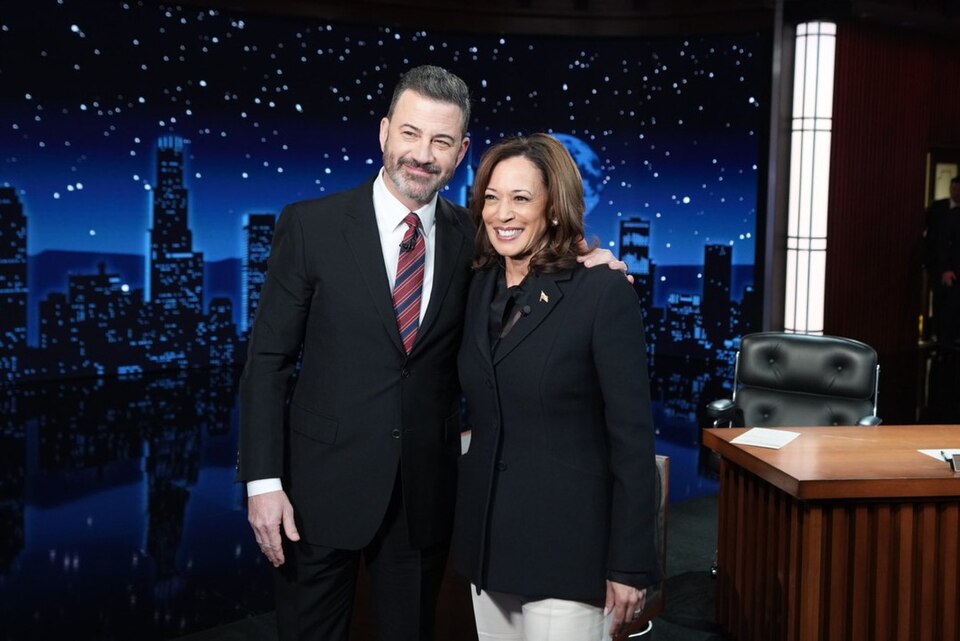
There is a specific, graying trajectory reserved for the American late-night talk show host.
First, you are a slightly edgy alternative comedian who wears a leather jacket or a suit that is vaguely too large for you. Then, you spend twenty-four years sitting behind a polished wooden desk in Hollywood, nodding sympathetically while a Marvel actor explains a hilarious prank they played on set involving a fake snake. Eventually—after thousands of monologue jokes about whatever minor political scandal happened that Tuesday, after millions of children have been tricked into eating their parents’ Halloween candy, and after a series of increasingly heated network battles with federal regulators over jokes you made on television—the end finally arrives.
Yesterday, reports surfaced that ABC will not be extending Jimmy Kimmel’s contract past May 2027. Naturally, Disney immediately rushed out a statement calling the news “inaccurate” and “purely speculative”, which is PR-speak for: We haven’t figured out how to write the press release without triggering a massive stock drop yet.
Whether Kimmel leaves in 2027 or gets dragged out by security in 2028, one question remains: What does a man like Jimmy Kimmel actually do after late night?
He cannot simply go quietly into the night. He is too famous, too rich, and far too accustomed to having a studio audience break into polite applause every time he delivers a wry, middle-of-the-road observation about national politics.
Here are the scenarios for Kimmel’s second act, ranked from “depressingly probable” to “god help us all.”
Option 1: The Hollywood Retirement Tour
-
The Pitch: He retreats to a massive ranch in Ojai or Idaho, wears exclusively comfortable linen shirts, and launches a weekly podcast about fly fishing, pizza ovens, and the lost art of the 1990s radio prank.
-
The Reality: This lasts six months. A man who has spent twenty-four years getting validation from studio applause cannot subsist on the quiet hum of a traeger grill. By month eight, he is hosting a celebrity poker tournament on a streaming service you’ve never heard of.
Option 2: The Prestige Executive Producer Shift
-
The Pitch: He pivots entirely behind the camera, producing critically acclaimed HBO comedy-dramas about sad, middle-aged men in Los Angeles who realize they don’t know who they are without their jobs.
-
The Reality: He wins two Emmys, but spending four hours a day reading script coverage makes him miss the raw, visceral adrenaline of doing a monologue bit where Guillermo dresses up as the Oscar statue.
Option 3: The Dark Horse Campaign – President Kimmel 2028
-
The Pitch: The ultimate, inescapable nightmare of modern American political life.
Let’s game this out. Because if the last decade of global politics has taught us anything, it is that the line between “guy who hosts an entertainment show” and “guy who holds the nuclear codes” is not a line at all—it’s a wide, open turnstile.
Imagine the announcement. It wouldn’t happen at a solemn press conference in Des Moines. It would happen during an extended, emotional monologue. He would sit behind the desk, look directly into the camera with that specific brand of furrowed-brow, tearful sincerity he perfected during his healthcare monologues, and say: “Look, I didn’t want to do this. I wanted to stay here and make jokes about the Bachelor. But Washington is broken.”
The crowd would stand up and cheer. Guillermo would bring out a ceremonial podium decorated with a red, white, and blue balloon arch.
How the Primary Plays Out
The Democratic primary of 2028 is already exhausting to think about, but Kimmel enters as the ultimate compromise candidate. He is anti-Trump enough to satisfy the base, but visually resembles a sensible suburban dad who knows how to fix a lawnmower.
His debates would be uncanny. While career senators debate tax brackets using complex policy jargon, Kimmel would simply wait for his turn, sigh, and deliver a razor-sharp, writers’-room-tested Zinger™ that cuts through the noise.
-
The Debate Strategy: Every time an opponent challenges his lack of foreign policy experience, he notes that he managed to host the Academy Awards four times without anyone getting murdered on live television (well, almost).
-
The Vice President Selection: In a move that puzzles political analysts for six weeks, he selects Matt Damon as his running mate, solely so he can cut Damon’s victory speech short by saying, “Apologies to Matt Damon, we ran out of time.”
The General Election & The Oval Office
A Kimmel general election campaign would be built entirely on “Mean Tweets”. His campaign rallies would look less like political events and more like live-taped variety shows featuring musical performances by Chris Martin and surprise appearances by Cousin Sal.
And if he won?
Picture the State of the Union address. President Kimmel walks up to the rostrum in the House chamber. He clears his throat, looks at the assembled joint session of Congress, and starts with a five-minute tight monologue. The Supreme Court justices sit in silence, unsure of whether they are allowed to laugh at a joke about the Federal Reserve.
The West Wing becomes a writers’ room. Policy decisions are made based on whether they will “play well on the East Coast.” Executive orders are delivered via pre-taped comedic sketches.
It sounds absurd. It sounds completely unhinged. But in a world where late-night talk shows are ending, media conglomerates are consolidating, and political discourse is entirely vibes-based, Jimmy Kimmel in the Oval Office isn’t just a joke—it’s the logical conclusion of the last twenty years of television.