Victor Wembanyama ruled out after heavy fall in Game 2
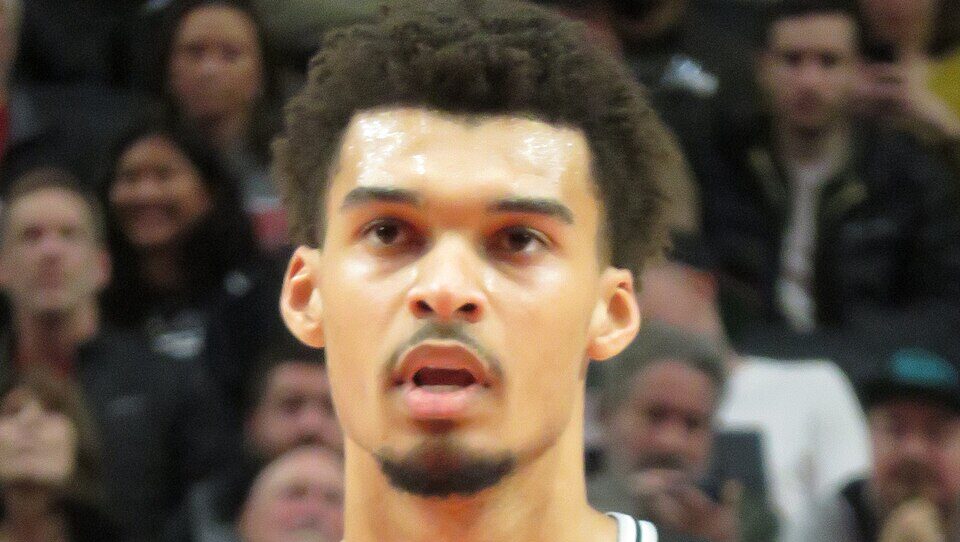
Victor Wembanyama was forced out of the San Antonio Spurs’ playoff clash with the Portland Trail Blazers after a worrying fall left him with a concussion.
The incident occurred in the second quarter when the 7-foot-4 star fell face-first onto the court, with his jaw striking the hardwood after contact with Jrue Holiday. He remained down briefly before walking to the locker room, where he was later diagnosed with a concussion and placed into the NBA’s concussion protocol.
The San Antonio Spurs ultimately lost 106–103, with the series levelled at 1–1. Wembanyama had made a quick impact before leaving, but his absence was immediately felt as Portland mounted a late comeback.
What concussion protocol means for Wembanyama
Entering concussion protocol creates immediate uncertainty around a player’s availability. The NBA requires a structured recovery process in which symptoms must fully resolve before any return to play is considered.
This process involves neurological testing and a gradual reintroduction to physical activity. Even if a player feels better quickly, clearance is not automatic. Medical staff monitor cognitive function, balance and reaction times before allowing a return to full contact.
In practical terms, that means Wembanyama’s status for upcoming playoff games remains unclear. Even a short absence could prove decisive in a tightly contested series.
How the injury changed the game
Before Wembanyama’s exit, the Spurs looked composed and in control. His defensive presence in particular is central to their system, altering shots and anchoring the paint.
After he left the floor, San Antonio built a lead but struggled to close the game. Portland capitalised late, overturning a double-digit deficit to steal the win. Without their focal point on both ends of the court, the Spurs lacked the same structure and deterrence.
In playoff basketball, where margins are thin, the loss of a player of Wembanyama’s influence can shift momentum almost immediately.
Concussions in basketball: an increasing concern
While basketball is not traditionally viewed as a high-risk sport for head injuries, concussions are far from rare. The combination of speed, height and hard playing surfaces creates a unique risk profile.
Falls are a major factor. Players frequently collide in mid-air or lose balance while attacking the rim, and the hardwood court offers little forgiveness. Taller players, like Wembanyama, can be especially vulnerable because of the distance involved in a fall and the angles at which they land.
A concussion is a form of traumatic brain injury caused by a blow or jolt to the head. Symptoms can include dizziness, confusion, headaches and sensitivity to light, though they do not always appear immediately. This delayed onset is one reason modern protocols are deliberately cautious.
The wider sports context
Across professional sport, concussion management has undergone a significant shift in the past decade. Leagues have moved away from the culture of playing through head injuries toward stricter medical oversight.
In American football, long-term studies into brain trauma have led to sweeping changes in how concussions are handled. Football (soccer) has introduced temporary substitutions to allow proper assessment. Basketball has followed suit with more formalised protocols designed to remove pressure from players to return too soon.
The central concern is cumulative damage. Returning to play before the brain has fully recovered increases the risk of more severe injury, including long-term neurological issues.
What happens next for the Spurs star
Wembanyama’s recovery timeline will depend entirely on how his symptoms progress in the coming days. Some players return relatively quickly, while others require extended rest.
For the Spurs, the challenge is both medical and tactical. They must balance caution with competitive urgency, particularly in the playoffs, where each game carries heightened importance.
For now, the focus will remain on ensuring a full recovery. In the modern NBA, the priority is clear: no matter the stakes, head injuries are treated with caution first and competition second.